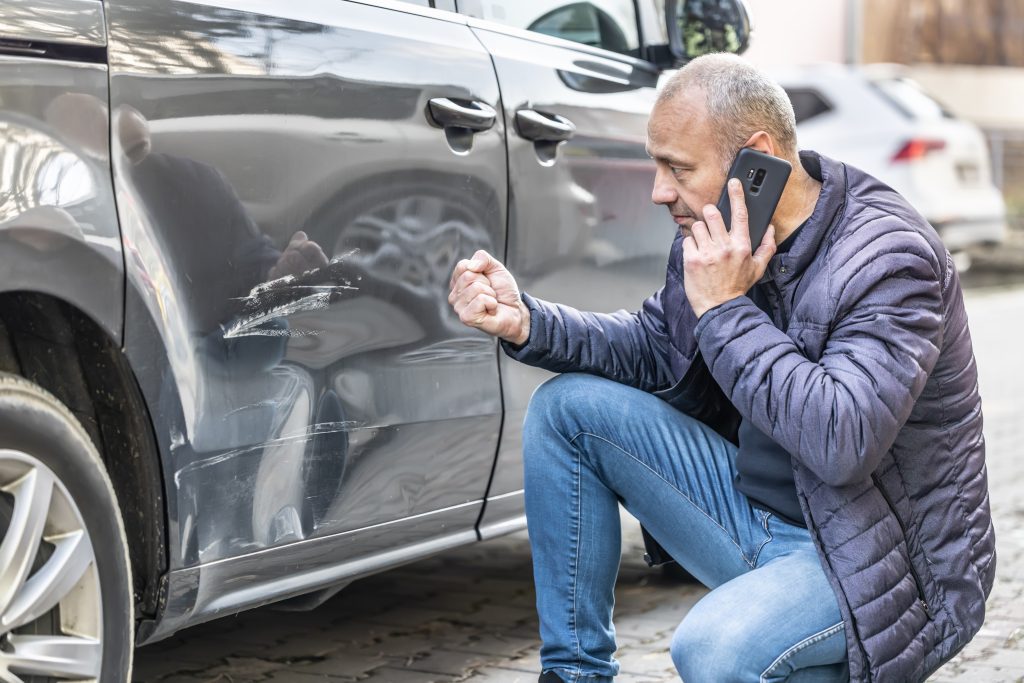
A dent in your car does not always mean an extensive bodywork repair. If the paint remains intact and the damaged panel is suitable, paintless dent removal can restore its shape without sanding, filling or repainting. That can mean fewer repair stages, lower material costs and less time without your vehicle.
For drivers balancing work, school runs and everyday journeys, the practical savings can matter as much as the repair bill. Having a suitable dent repaired at home or work can make the whole process easier to fit around your day.
At ScuffDoc, we assess the damage before recommending a repair method. This guide explains where paintless dent removal can save you time and money, what affects the quotation and when another approach may be needed. For a wider overview of on-location repairs, read our complete guide to mobile car dent repair in Nottingham.
Paintless dent removal, also called paintless dent repair or PDR, reshapes dented metal while retaining the existing paint finish. A technician uses specialist tools to make controlled adjustments to the panel, gradually working the damaged area back towards its original contours.
Rather than simply pushing a dent out in one movement, the repair involves careful, repeated adjustments. Reflection lighting helps the technician identify low and high spots and assess how the surface changes throughout the work.
The aim is to correct suitable damage without introducing filler or a new paint finish. However, the condition of the paint and metal must support that approach. An inspection is essential before confirming what can be achieved.
A conventional dent repair may involve reshaping the panel, applying filler, sanding, priming and repainting. Where refinishing is necessary, preparation and drying stages form part of the overall repair schedule.
PDR avoids those paintwork stages when the existing finish can be retained. There is no replacement colour to match or freshly applied paint to dry. This can shorten the process for suitable minor damage, although a difficult dent can still require considerable care.
Repair time is only one part of the inconvenience. Travelling to a workshop, arranging a collection and organising another journey can take up additional time.
Our mobile car dent repair service in Nottingham allows suitable repairs to be carried out at your home or workplace. The location needs safe working conditions and adequate access to the affected panel. Confirming those details when you enquire helps us plan the appointment.
For example, a driver with a suitable door ding may be able to have the work assessed and completed while working from home, avoiding separate workshop journeys.
Some straightforward repairs can be completed within a few hours. Multiple dents, awkward access or more complex shapes can take longer. Booking availability also affects how soon the work can begin.
Ask for an estimated duration once the damage has been assessed. It is better to plan around your particular repair than assume every PDR job will take the same amount of time.
Where PDR is appropriate, the repair does not require body filler, primer or replacement paint. Avoiding these materials and their associated application stages can reduce the total cost compared with a repair that requires refinishing.
The savings depends on the work involved. PDR is a skilled service, and a technically demanding dent may require more labour than its appearance suggests. A smaller dent is not automatically a cheaper dent to repair.
A suitable paintless repair addresses the dent while preserving the existing finish. The value lies in choosing a method that resolves the damage without adding unnecessary stages.
However, choosing PDR purely because it sounds cheaper can be a false economy if the panel needs paintwork or more extensive attention. A useful quotation should explain the proposed method, the expected result and any limitations identified during assessment.
Keeping intact factory paint can be an advantage when repairing cosmetic damage. PDR allows that finish to remain in place rather than replacing it as part of the repair.
Removing visible dents can also improve how your car presents to a prospective buyer or part-exchange assessor. It does not guarantee a higher selling price or mean every repair will pay for itself. Consider the condition of the whole vehicle and the repair quotation before deciding.
Common candidates include shallow car park dents, door dings and some shopping trolley impacts where the paint remains undamaged. Some hail dents and creases may also be repairable, depending on their shape and location.
The cause alone does not determine suitability. Two dents caused by opening doors can need different repair methods if one has damaged the paint or affected a difficult part of the panel.
Paint Condition
Cracked, chipped or badly scratched paint needs separate attention. Reshaping the metal does not repair a broken paint finish. Previous repainting or filler should also be disclosed so the technician can account for the panel’s repair history.
Depth and Shape
A broad, shallow depression may be more suitable than a tiny but sharply defined dent. Deep impacts can stretch the metal, making the repair more difficult. Size is useful information, but it is only one part of the assessment.
Position and Access
Panel edges, reinforcement bars and restricted spaces behind the damage can affect tool access. A dent on a body line may also require more complex work. These factors help explain why a technician needs to see more than a close-up photograph.
Both methods have a place. The right choice depends on the damage and the finish required.
| Consideration | Paintless dent removal | Conventional dent repair |
| Paint condition | Usually suited to intact paint | Can include repairing damaged paint |
| Repair approach | Reshapes suitable metal without refinishing | May include reshaping, filling and repainting |
| Time involved | Can be shorter for suitable dents | Includes any necessary preparation and refinishing stages |
| Cost factors | Complexity, access and technician time | Labour, materials and extent of refinishing |
| Main limitation | Cannot by itself restore missing or cracked paint | May require more stages to complete |
A dent with a scrape across it may need both reshaping and paintwork. If that applies to your vehicle, explore our car scratch repair service in Nottingham or send photographs so we can assess both issues together.
An accurate quote needs more information than the dent’s approximate diameter. The number of dents, their depth and location, the panel construction and the access required can all change the work involved.
When comparing quotations, check that each covers the same damage and expected outcome. A price for one shallow door ding is not a useful comparison with a quote for several dents across different panels.
It also helps to ask whether any trim removal and refitting is included, whether the initial estimate depends on an in-person inspection, and what happens if paint damage is discovered. These questions make the scope clearer before you commit to an appointment.
Avoid treating a general online price as the cost of your particular repair. Clear photographs and vehicle details provide a more useful starting point.
You can help us understand the damage by sending:
A wider photograph showing the dent’s position on the vehicle.
Clear close-up images taken from more than one angle.
Your vehicle make, model and registration.
Your postcode and preferred repair location.
Details of scratches, cracked paint or previous repairs in the affected area.
Take photographs in good light, keeping reflections visible where possible. A short video moving around the damaged area can also help show a dent that disappears in a straight-on image.
Mention all the areas you would like assessed in the same enquiry. If you are arranging repairs before selling your car, explain your timescale so availability can be discussed early.
For more detail about arranging an on-location repair, see our guide to mobile dent repair appointments in Nottingham.
The promise of a cheap, instant repair is appealing, but a reliable recommendation starts with understanding the panel. Photographs can support an initial assessment; direct inspection may reveal paint defects or access restrictions that are difficult to see remotely.
Before agreeing to the work, ask what result is realistic, how long the appointment is expected to take and whether PDR alone will resolve the damage. A clear explanation helps you weigh the cost against the improvement you want.
Our related article on why accredited technicians matter for mobile car repair jobs explores another useful consideration when choosing a repairer.
Paintless dent removal can be a practical way to deal with suitable cosmetic dents, combining fewer repair stages with the convenience of a mobile appointment. The first step is finding out whether it is right for your car.
At ScuffDoc, we assess dents and recommend an approach based on the paint condition, panel shape and access available. Contact our team for a free, no-obligation quote and send clear photographs of the damage, your vehicle details and postcode.
Email enquiries@scuffdoc.co.uk to discuss paintless dent removal in Nottingham and the next steps for your repair.
It can cost less for suitable dents because it avoids filler and paintwork stages. However, access difficulties, complex creases and multiple dents can increase the labour involved. Ask for a quotation based on your car rather than assuming a fixed saving compared with conventional repairs.
Straightforward dents can sometimes be repaired within a few hours, while more complicated work takes longer. The number of dents, panel access and damage shape all matter. Ask for an estimated repair duration after assessment, and confirm appointment availability separately.
Some body-line dents can be repaired using PDR, but they need individual assessment. The sharpness of the damage, the extent of metal stretching and the access behind the panel affect what is possible. Include angled photographs that clearly show the dent crossing the body line.
PDR reshapes the metal and does not replace missing paint or remove scratches. A dent with damaged paint may need additional refinishing work. Send photographs showing both the dent and the surface damage so the recommended repair addresses the complete problem.
Can a Large Dent Be Repaired Without Painting?
Sometimes. A large, shallow dent may be repairable where the paint and metal remain suitable. A much smaller, deeper dent can be more challenging. There is no reliable size-only rule, so an assessment should consider depth, location, paint condition and tool access together.
A dent successfully corrected using PDR should not reappear by itself: the metal has been reshaped. A later impact can create new damage in the same area. Ask the technician about the expected result and any limitations before the repair begins.
Suitable dents can be assessed for mobile repair at your workplace in Nottingham or the surrounding area. We need a safe place to work and sufficient access around the vehicle. Share your postcode and parking arrangements when enquiring so we can discuss whether the location is suitable.